
What do laundry and an art practice have in common? More than you might think...
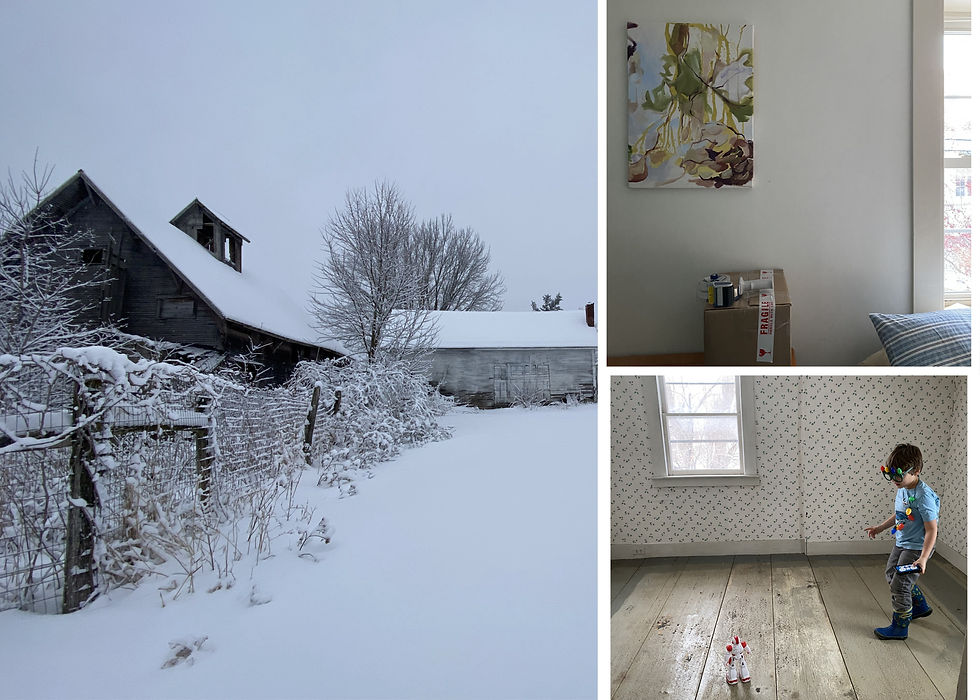
When we moved into our farmhouse this winter, one of the many things the house didn't have was working plumbing. Which also meant no washing machine.
At first, I figured we'd make do for a little while. We tried the local laundromat. We spent what felt like a small fortune on wash-and-fold laundry. Every week I'd look at the mountain of clothes our family of four somehow managed to produce and dread hauling it all to the cramped laundromat, over-lit with flourescent lights and other folks looking equally as defeated as I felt after sticking my ten dollars worth of quarters into the industrial-size machine.
Eventually, mostly out of curiosity (and maybe a little desperation), I decided to try the bin method.
That's right.
A giant utility bin filled with hose water.
I picked up a wooden-handled scrub brush to tackle the mud permanently embedded in my son's shorts. I even invested in a washboard.
And... I kind of fell in love with it?
I found the cool water on my hands and arms to be surprisingly pleasant in the hot July sun.
One of the things I liked most was that I could stop whenever I needed to. If one of the kids interrupted me, the laundry simply soaked while I helped. If I got tired or just wasn't enjoying it anymore, I could walk away and come back later.
Nothing beeped.
Nothing demanded my attention.
The laundry just waited.
When each small batch was clean, I'd hang it on the line with a view of the mountains. Somehow it came out cleaner—and smelling wayyy better—than anything I'd brought home from the laundromat.

I remembered something my husband had brought home years ago from a garage sale: an old Victorian era clothes wringer. At the time I thought it was beautiful mostly because it reminded me of another era. I thought I might put it somewhere as decor. I never imagined I'd actually use it.

The first time I set it up, my son came running over to help. I held the towel at the top while he cranked the handle. Water gushed out the back, and a damp towel slowly emerged from the front.
He finished the last turn, looked up at me with the biggest grin, and said,
"That's SO satisfying!"
We high-fived.
I've been thinking about that moment a lot lately.
After a few months of washing clothes this way, I realized that one of the chores I used to dread had quietly become one of the most soothing parts of my day.
The rhythmic sloshing of water.
The gentle tap of the washboard.
The mountain breeze and sunshine embedding itself in my clothes, following me to the office the next day.
And maybe my favorite part... watching my children handle their clean clothes differently.
When you've watched someone scrub the mud out of your favorite shirt, rinse it, helped wring it out, and watched it hang in the sunshine, it's harder to toss it carelessly onto the bedroom floor.
Somehow they felt the love behind it all.
People ask me all the time why my art practice includes spending so much effort making natural pigments from rocks, plants, and all sorts of other natural materials when perfectly good paint already exists.
It isn't really about the paint.
It's about attention.
There's something that happens when you slow down enough to make something with your own hands.
You notice more--the way a botanical ink moves across the page, making fractals that remind you of the original plant's branching leaves. The tiny sparkle in a rock. The fresh scent of black walnut husks. It is about the countless little things that reveal themselves only after you've sat somewhere long enough to notice them. It embeds the work with meaning.

I don't know that I'll always do laundry this way. In fact, one day I hope very much to have a washing machine! But from now on I 'll always know in my hands and heart that efficiency and attention are not the same thing.
Efficiency gets the laundry done.
Attention changes the person doing it.
Maybe that's what I've been making all along.
Not just paintings.
Not just pigments.
But a practice of paying attention.
And if I'm lucky...
Maybe inviting you to slow down long enough to notice, too.
As ever, happy trails.
-Mira
Artist, Growing In Process

Comments