
Can you spot these Summer Wildflowers of the Northeast on your next hike?
These are some of my favorite wild companions of the season. Consider this your unofficial scavenger hunt. How many can you find??
Goldenrod (Solidago spp.)

Let’s start with one of my absolute favorite wildflowers of the northeast. Goldenrod often gets blamed for seasonal allergies, but that’s a case of mistaken identity—it blooms alongside ragweed, the real culprit. Look for its dense golden plumes waving in late-summer fields and along sunny roadsides.
For me, it’s more than beautiful—it’s a powerhouse pigment plant, long used by natural dyers. It gives a clear, cheerful yellow to fiber and a warm golden tone when taken through the laking process. This is the color of sunlight...and you can hold it in your hand!
Goldenrod is native to North America and includes many species found in the Northeast. It is a key plant for pollinators and a sign of a healthy ecosystem.
Chicory (Cichorium intybus)

This scrappy little plant might just be the most underrated bloom on the roadside. With its pale periwinkle petals and gangly stem, chicory looks like it doesn't quite belong—and that’s part of what I love about it. It opens only in the morning, and each flower lasts just a few hours before fading.
The color is a soft, almost dusty blue—not something you find often in the wild. Historically, the roots were roasted and used as a coffee substitute, especially during lean times. It’s a flower of resilience and improvisation.
Chicory is native to Europe and was introduced to North America in the 1700s; however it is widely naturalized along roadsides and fields.
Jewelweed (Impatiens capensis)
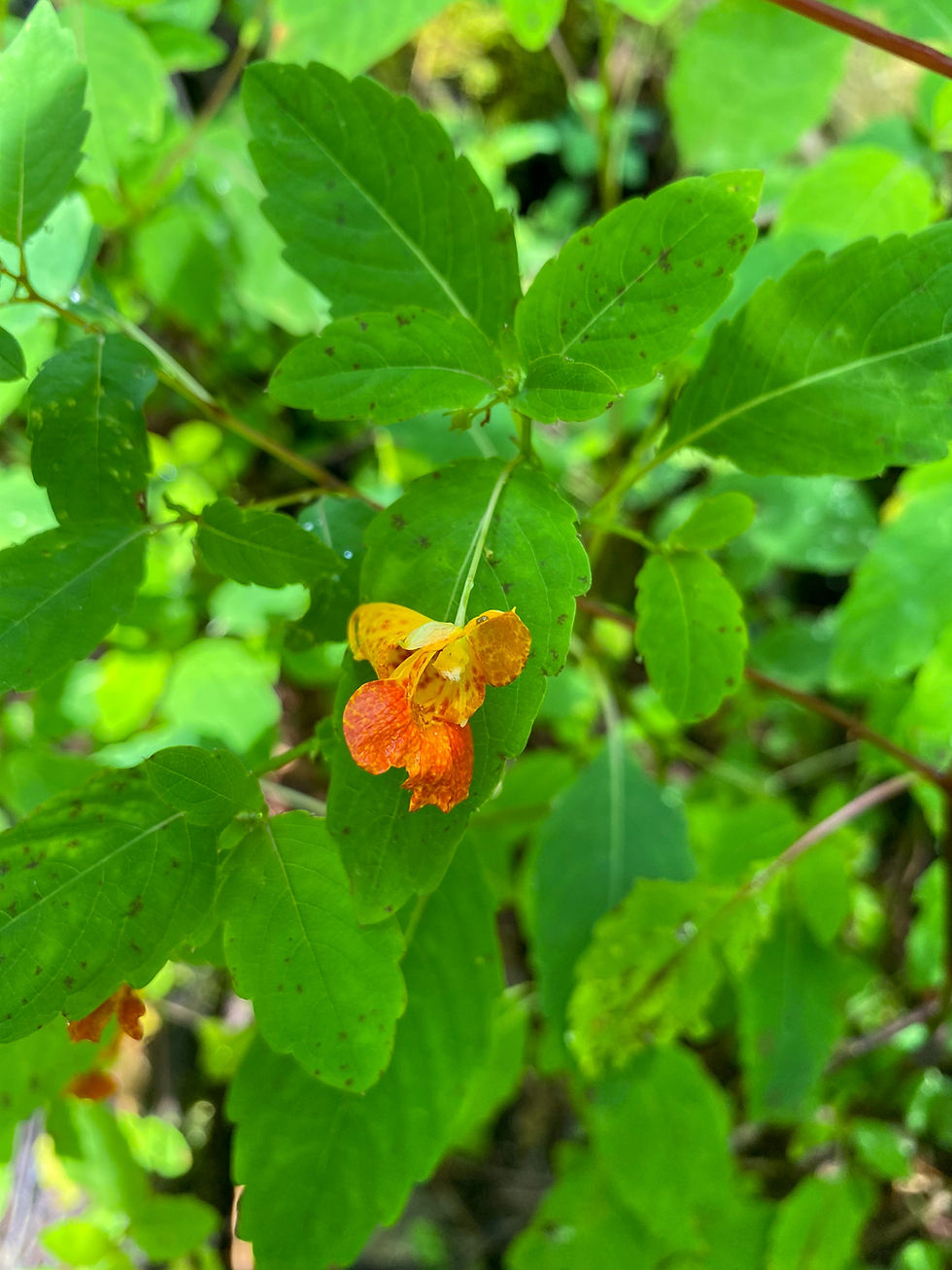
You’ll find this delicate orange flower near damp areas and alongside streams. Its name comes from how water beads and sparkles on the leaves like tiny jewels. Jewelweed doesn’t give pigment, but it’s endlessly generous: hummingbirds adore it, kids can't get enough of its exploding seed pods, and the juice in its succulent stems has been used for generations as a remedy for poison ivy. It’s part medicine, part magic trick.
Native to most of eastern North America, especially wet woodlands and stream banks.
Buttercup (Ranunculus spp.)

These tiny, glossy yellow blooms are pure whimsy. They’re not useful for pigment, and they can degrade pasture quality, but they are good for the soul. Abundant from early summer through the end of the season, buttercups catch the sun like mirrors and seem to glow from within. I can’t explain it—but whenever I see one, I smile. Maybe you will too.



Comments